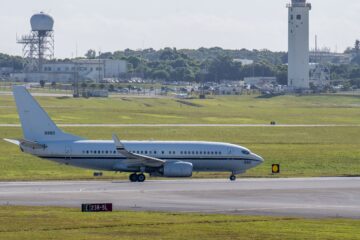
Airport surface operations are a constant exercise in coordination. Aircraft, gates, runways, taxiways, deicing areas, ground vehicles, service crews, air traffic controllers, airline operations teams, and airport personnel all interact within a limited amount of space.
When operations are running smoothly, that complexity may be manageable. When weather, equipment outages, congestion, gate conflicts, or other disruptions occur, the effects can quickly spread across the airport and throughout the National Airspace System.
Airport operators and aviation stakeholders already have access to more operational data than ever before. The challenge is turning that data into a shared, accurate, and forward-looking understanding of airport operations.
That is where digital twins are becoming increasingly valuable.
What Is an Airport Digital Twin?
A digital twin is a virtual representation of a real-world asset, process, or operating environment. Unlike a static model or conventional airport map, a digital twin can be continuously updated using real-time and historical data.
For an airport, a digital twin may represent:
- Aircraft and vehicle movements
- Runway, taxiway, ramp, and gate activity
- Airport configurations and operational constraints
- Weather conditions
- Traffic demand and departure queues
- Ground service activity
- Deicing operations
- Predicted aircraft movement times
- Planned construction or infrastructure changes
The purpose is not simply to produce a more sophisticated visualization. A useful digital twin combines data, models, simulation, prediction, and decision-support capabilities so stakeholders can understand current conditions, anticipate future outcomes, and evaluate potential responses.
NIST describes forecasting as a foundational element of digital twins, supporting functions such as monitoring, simulation, optimization, and decision support. NASA’s National Airspace System Digital Twin similarly combines historical or live traffic with simulated aircraft to evaluate both current and future operations in real-time and fast-time environments.
In other words, an airport digital twin should help answer three questions:
What is happening now? What is likely to happen next? What would happen if we made a different decision?
Why Airport Surface Operations Need More Than Situational Awareness
Real-time situational awareness is an essential starting point. Stakeholders need to know where aircraft and vehicles are, which runways are active, where queues are developing, and which resources are constrained.
But seeing current conditions does not necessarily tell an operator what those conditions mean, or what to do next.
For example, a display might show a growing departure queue. A digital twin could go further by estimating how that queue will develop under the current runway configuration, identifying which flights are likely to experience the greatest delays, and testing whether an alternative metering strategy would improve throughput.
This progression, from visibility to prediction and then to decision support, is what makes digital twins especially relevant for surface operations.
The FAA’s Terminal Flight Data Manager program reflects this broader shift toward shared data and predictive surface management. TFDM exchanges electronic information among controllers, traffic managers, aircraft operators, and airports while supporting shared awareness, surface scheduling, departure metering, and integration with systems such as TBFM and TFMS.
A digital twin can build upon the same principles, bringing operational information into a unified environment where airport stakeholders can evaluate both immediate conditions and future scenarios.
Creating a Shared Operational Picture
Airport information is frequently distributed across multiple systems and organizations. An airline may have detailed gate and turnaround information, while the airport maintains infrastructure and vehicle data. The FAA provides surveillance, flight, flow, weather, and aeronautical information through systems such as System Wide Information Management.
Each source may be valuable on its own, but surface decisions rarely depend on one data feed.
A digital twin can fuse these sources into a shared operational picture. Rather than asking users to interpret several independent displays, it can connect related information around each flight, airport resource, and operational event.
This can help airport stakeholders identify:
- Developing gate or taxiway conflicts
- Departure demand that may exceed available capacity
- Aircraft at risk of missing scheduled movement times
- The operational effects of changing weather
- Unexpected differences between planned and actual activity
- Potential downstream consequences of local decisions
The result is not merely greater access to data. It is a more complete understanding of how the airport is operating as an interconnected system.
Moving from Reactive to Predictive Operations
Traditional operational tools often tell stakeholders that a problem has already occurred. A digital twin can help identify problems while there is still time to respond.
Machine learning, optimization, operational rules, and trajectory models can be applied to fused airport data to predict events such as taxi times, gate arrival times, runway demand, departure queue growth, and resource conflicts.
Consider an aircraft approaching an occupied gate. A conventional system might alert the operations team when the conflict becomes immediate. A predictive airport twin could identify the conflict earlier, estimate when the gate will become available, assess alternative parking or sequencing options, and show how each response could affect other flights.
The same approach could be applied to deicing demand, runway configuration changes, severe weather recovery, construction impacts, or irregular operations.
Predictive capabilities do not replace operational expertise. They give experienced personnel more time and better information with which to make decisions.
Testing Operational Changes Before Implementing Them
One of the most valuable characteristics of a digital twin is its ability to support “what-if” analysis.
An airport or flight operator could use a digital twin to explore questions such as:
- What happens to departure queues if the runway configuration changes?
- How will a taxiway closure affect movement times and congestion?
- Where should aircraft be staged during a severe weather event?
- How would a new deicing procedure affect throughput?
- What are the benefits and risks of a proposed surface metering strategy?
- How will new infrastructure change traffic patterns?
- How could UAS or Advanced Air Mobility operations interact with existing airport activity?
NASA’s NAS Digital Twin environment demonstrates how live, historical, and simulated traffic can be combined to evaluate new concepts across the development lifecycle. This kind of testing can support early concept exploration, human-in-the-loop evaluation, operational trials, and eventual field implementation.
For airport stakeholders, this creates an opportunity to identify unintended consequences before changing an operational procedure or investing in new infrastructure.
Supporting Safer Surface Operations
Digital twins also have an important role to play in surface safety.
A digital twin can correlate aircraft movement, vehicle activity, airport configuration, operational intent, and known constraints. Depending on the data and system design, it could help detect conditions that warrant additional attention, including unexpected movements, occupied resources, developing conflicts, or deviations from normal operating patterns.
The FAA’s surface safety initiatives emphasize the importance of timely, accurate depictions of aircraft and vehicle activity, particularly where controllers may not have visibility into every part of the airport surface.
A digital twin can extend that situational awareness by adding historical context, prediction, simulation, and operational analysis. It can also support post-operation playback, helping teams reconstruct events, evaluate procedures, train personnel, and identify opportunities for improvement.
The objective is not to automate safety-critical decisions without appropriate oversight. It is to give decision-makers a more complete and timely understanding of the operating environment.
What Makes an Airport Digital Twin Operationally Useful?
A digital twin is only as valuable as the decisions it supports. An elaborate 3D model with incomplete data or poorly designed workflows may be visually impressive but operationally limited.
An effective airport digital twin requires several foundational capabilities.
- Trusted, Fused Data
Flight, surveillance, weather, airport, airline, and vehicle information must be cleaned, correlated, and reconciled. Conflicting records and inconsistent identifiers can quickly undermine user confidence.
- Fit-for-Purpose Modeling
Not every component requires the same level of fidelity. The models should be accurate enough to support the intended operational decision without making the system unnecessarily expensive or difficult to maintain.
- Prediction and Simulation
A twin should provide more than current-state monitoring. Forecasting, fast-time simulation, historical playback, and scenario comparison are what transform a digital representation into a decision-support environment.
- Interoperable Architecture
Airport technologies and data sources will continue to evolve. A digital twin should therefore use modular services, standards-based interfaces, and flexible architectures that can accommodate new systems and operational concepts.
- Human-Centered Decision Support
Information must be presented in a way that aligns with the responsibilities, procedures, and time constraints of the people using it. Controllers, airport operators, airline dispatchers, ramp personnel, and traffic managers may all need different views of the same underlying operational environment.
- Validation and Governance
The models, predictions, and recommendations produced by the twin must be evaluated and maintained. Data provenance, cybersecurity, access controls, model performance, and operational assumptions all need to be addressed throughout the system lifecycle.
How Mosaic ATM Supports the Digital Twin Vision
A complete airport digital twin is not a single dashboard, model, or data feed. It is an integrated capability that combines aviation domain knowledge with data engineering, systems engineering, simulation, artificial intelligence, software development, and human factors.
Mosaic ATM already works across many of these foundational areas.
Aviation Data Integration and Fusion
Mosaic’s aviation data capabilities include ingesting, cleaning, parsing, and fusing information from FAA SWIM services, weather sources, surveillance feeds, airline systems, and proprietary customer data.
The Mosaic Fuser intelligently reconciles disparate and sometimes conflicting data feeds to create a coherent record for each flight. This type of trusted data foundation is essential for any digital twin intended to support operational decisions.
Advanced Surface Traffic Management
Mosaic has extensive experience with airport surface traffic management, Surface Trajectory-Based Operations, collaborative decision-making, and TFDM-related concept and system development.
Our work has included field trials, prototype efforts, gap analyses, requirements development, enterprise architecture, algorithm design, and support for NASA and FAA surface management initiatives.
This experience helps ensure that digital twin capabilities reflect how airport surface operations actually work, not simply how they appear in a software model.
Modeling, Simulation, and Shadow-Mode Evaluation
Mosaic’s engineering services span fast-time modeling, simulation, prototype development, shadow-mode assessments, human factors analysis, and operational trials.
These capabilities can help airports and aviation organizations evaluate digital twin concepts before placing them into an operational environment. Mosaic can also support requirements development, architecture analysis, cost-benefit assessment, risk analysis, and validation as a concept moves from research toward implementation.
Predictive Analytics and Artificial Intelligence
Mosaic applies machine learning, optimization, operational rules, and advanced analytics to aviation data. Through our work supporting NASA’s Digital Information Platform (DIP), Mosaic helped transform a legacy surface-management capability into the Machine Learning Airport Surface Model, a scalable, cloud-based predictive service. The model supports real-time predictions for airport configuration, arrival and departure runway assignments, surface movement times, and other inputs used to estimate takeoff times, understand current demand, and evaluate potential delay-saving opportunities. NASA developed DIP specifically as a cloud foundation for integrated aviation data and machine-learning services that can be evaluated in operational environments.
This work included one of the first uses of machine learning in operational shadow evaluations for airport surface and terminal operations. In shadow mode, the system runs passively alongside live operations, generating predictions for departures and arrivals without controllers or flight operators acting on its recommendations. This allows researchers and operational stakeholders to compare real-time model behavior with offline training results, identify demand patterns that may not be apparent from static data, and refine delay metrics before introducing a new capability into active operations.
After an operational evaluation in North Texas, NASA deployed the Machine Learning Airport Surface Model in the Houston airspace to assess how well the approach could scale to a different airport and traffic environment. The evaluation examined how changing demand, runway-use strategies, and live surface activity affected departure and arrival predictions. These insights helped improve the models’ understanding of current operating conditions while strengthening the estimated movement-time and delay information provided to decision-makers.
For airport digital twins, the connection is direct. A digital twin becomes far more valuable when it can do more than mirror current conditions: it can use live and historical data to forecast demand, estimate surface and departure delays, evaluate rerouting or sequencing alternatives, and test predictive services safely before they influence operations. Mosaic’s work with NASA DIP demonstrates the aviation expertise, data engineering, machine-learning operations, and validation processes required to move predictive models out of the laboratory and into operationally relevant environments.
Operational Visualization and Custom Software
Tools such as the Mosaic Situation Viewer already combine fused aviation data, surface visualization, weather, prediction, metrics, alerting, and historical playback.
While a digital twin extends beyond visualization, these capabilities represent important building blocks for an airport-focused twin. Mosaic also develops custom aviation software, cloud services, interfaces, APIs, dashboards, and decision-support applications tailored to customer systems and operational requirements.
Start with the Decision, Not the Technology
An airport does not need to model every asset and process on day one.
The most effective digital twin strategies begin with a clearly defined operational problem. That might be improving taxi-time predictability, managing departure queues, coordinating deicing, reducing gate conflicts, evaluating construction impacts, or accelerating recovery from irregular operations.
From there, stakeholders can determine:
- Which decisions the twin must support
- Which data sources are required
- What level of modeling fidelity is appropriate
- How predictions and scenarios will be validated
- How the capability will fit into existing operational workflows
A focused prototype can then be evaluated using historical data or operated in shadow mode alongside current systems. Once its value has been demonstrated, the twin can expand to incorporate additional data, resources, users, and operational scenarios.
This incremental approach helps organizations achieve measurable benefits without treating the digital twin as a massive, all-or-nothing technology program.
Building a More Predictive Airport
As airport operations become more connected, data-rich, and operationally interdependent, stakeholders will need tools that do more than display current conditions.
Digital twins offer a path toward more predictive and resilient airport operations. By combining trusted data, operational models, simulation, AI, and human-centered decision support, they can help stakeholders understand what is happening, anticipate what comes next, and evaluate potential actions before committing resources.
Mosaic ATM brings together the aviation expertise and technical capabilities required to help organizations define, prototype, evaluate, and implement these solutions, from aviation data fusion and surface traffic management to systems engineering, predictive analytics, simulation, and custom software development.
The future airport digital twin will not simply mirror the airport. It will help stakeholders operate it more safely, efficiently, and intelligently.
Ready to explore how a digital twin could support your airport or aviation operation? Contact Mosaic ATM to discuss your operational needs and identify a practical starting point.