Case Studies
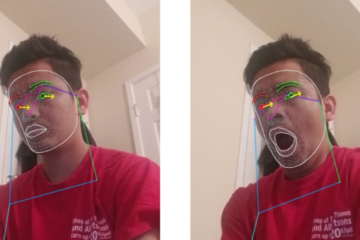
Advancing Rail Safety with Computer Vision and Human Factors
Mosaic ATM developed a scalable, camera-based framework to better understand fatigue progression in safety-critical transportation operations.
Mosaic ATM developed a scalable, camera-based framework to better understand fatigue progression in safety-critical transportation operations.
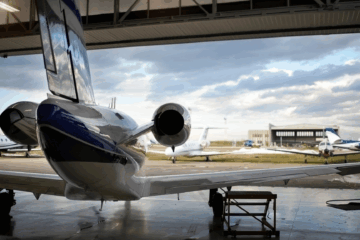
This case study explores how the Contingency Planning Toolkit for Advanced Air Mobility (CPT AAMO) equips NASA and industry with innovative software and AI solutions to enhance safety, resilience, and scalability in future cooperative airspace operations.

Mosaic ATM’s drone services company, Aerial Vantage, developed OLYMPUS, which uses ML models to drastically reduce weather prediction data computational time while extending forecast horizons significantly.

Building on 20+ years of expertise in air traffic management and system optimization, Mosaic ATM collaborated with NASA to develop the Alternate Route Availability Tool (ARAT). The project aimed to boost operational efficiency and reduce delays in the National Airspace System (NAS) by providing advanced, data-driven alternate routing solutions.

In this case study, Mosaic supports the FAA’s Counter UAS Detection and Mitigation project, a critical initiative aimed at enhancing the safety and security of airspace around sensitive locations such as launch sites and airports.

Mosaic ATM is supporting NASA by developing explainable machine learning models to assist with lunar rover exploration.

To realize the full power of machine learning, organizations need to focus on operations and delivery of the predictions as much as the development of the algorithm itself. In the case of NASA and ATD-2, building trust in the machine learning predictions is essential to expanding their use to improve inefficient operations and unused capacity. Air traffic controllers must trust the recommendations presented by them, and validation is essential towards building trust.

Mosaic sought to provide an open and accessible model to predict the impacts of wind on air miles flown under an SBIR contract with NASA. Ultimately, this effort has developed a model that the broader aviation community can use as a publicly available data service.

The taxi-out time predictions help pilots decide when to “single-engine taxi”: taxi most of the way to the runway with only a single-engine turned on, turning on the second engine just a few minutes before take-off. The single-engine taxi decision is typically made by pilots within an hour of push back. Still, our customer asked for predictions up to four hours in advance of the expected push back time.

Use of the Cloud has allowed commercial and Government systems to leverage the flexibility, scalability, reliability, and security of Cloud infrastructure to achieve significant efficiencies, and rapid innovation, in complex operational environments. The associated move to a micro-services Service Oriented Architecture (SOA) in the Cloud has further enhanced modularity, re-use of system capabilities, and simplification of verification and validation testing.